

I defended my doctoral dissertation on November 30, 2009. It was a particularly stressful time in my life. My father had passed away earlier that month, and there were days when I questioned my own fortitude. Some mornings, I would wake up feeling the pressures of life were constricting around me. It didn’t even take anything particularly significant to trigger those feelings.
Everything seemed to add to the weight I was already carrying. Images of things I needed to do, or hadn’t done yet, would rapidly cascade through my mind, accompanied by an internal voice taunting me for my inaction. My chest would tighten, my heart would start racing, my head would become cloudy, and I would experience a sensation of losing control. Yes, classic symptoms of an emerging panic attack.
Just a month earlier, on October 30, Pearl Jam released the single “Just Breathe” from their ninth studio album. I heard it for the first time on the radio during one of those November mornings while driving to work. While I didn’t absorb all the lyrics at the time, I was swept in by that soft, calming melody and that simple reminder to just breathe.
Breathing is something we do naturally (approximately 17,000 to 28,000 times a day), yet we rarely think consciously about it unless we’re having difficulty doing it. Like when we need to “catch our breath” after physical exertion. Or someone startles us, or we begin to panic from worries or fears circulating in our minds. Most of the time, we approach breathing passively. We are almost shocked when it announces its presence, seemingly out of nowhere.
The empowering thing is that we can take an active role in our breathing. Don’t worry; I’m not adding another thing to your daily to-do list that you need to monitor continuously. However, learning to breathe with intention and incorporating it into our toolbox of wellness strategies can make a meaningful difference. In an unpredictable world where we sometimes feel tossed around by life’s uncertainties, it helps to have a few effective strategies that anchor us and keep us grounded and present.
First, what are the benefits of learning how to breathe with intention? Research has associated various intentional breathing practices, including deep and diaphragmatic breathing, with a range of potential health benefits, including reductions in anxiety (Banushi et al., 2023), depressive symptoms and stress (Fincham et al., 2023), improvements in sleep (Kakuei et al., 2025), pain (Mikkelsen & Loving, 2026), blood pressure (Yau & Loke, 2021), among other potential benefits (Meghanathi, Suresh, and Shwetha, 2024).
Now, that might make deep breathing seem like a cure-all for everything. Of course, it isn’t. However, the research suggests that learning how to breathe with intention can be a useful addition to our overall health and wellness strategies.
Learning a few breathing techniques certainly doesn’t make all our life challenges go away. What it can do, though, is help us regulate our stress response, creating an opportunity to think more clearly and respond more intentionally to the challenges we are facing. In other words, deep breathing can help us move forward instead of getting stuck in cognitive inertia.
Before I walk you through some simple, effective breathing techniques and their potential applications for practice, let’s talk about what’s going on in our bodies when we are stressed.
First of all, stress and the accompanying feelings of anxiety aren’t necessarily bad things. They serve important protective roles in keeping us safe. Stress is a natural physiological response to situations we perceive as challenging or threatening. Our brain and body release stress hormones that prepare us to act. Our heart rate increases, blood flow shifts toward the muscles, and additional energy becomes available. All systems go. Pretty nifty when we are faced with immediate danger.
Or when we need to get moving on something we have been reluctantly putting off. Or need to be alert and focused to make an important life decision. Not so fun when that heightened state of stress becomes our everyday experience.
When everything is copacetic with our internal regulatory system, we naturally ramp up when experiencing stress and then slowly calm down when the real or perceived threat is no longer present. Our autonomic nervous system is comprised of two primary parts: the sympathetic nervous system (SNS) and the parasympathetic nervous system (PNS). Ideally, they work together to help our bodies regulate between times of rest and times we need to be alert and ready for action. The sympathetic nervous system is the side that is activated when there is a perceived threat (think: fight or flight). The parasympathetic nervous system is the side that helps the body relax after a danger has passed by slowing down the heart, relaxing the muscles, and helping us return to a calmer state (think: rest and digest).
Sometimes, our body’s stress response can remain heightened, even when no real danger is present. Or it remains activated long after a threat to our well-being has subsided. When we experience frequent or intense stress in the body over a prolonged time period, we call that chronic stress. The list of things that we could be experiencing that are potential antecedents to chronic stress is endless. It could be from past, present, or anticipated future events. It could be one thing we are hyper-focused on or multiple life challenges hitting us all at once. Basically, anything that creates enough uncertainty, doubt, fear, or worry to leave us in a perpetual state of feeling threatened or in danger.
Here is where breathing often becomes our foe rather than our friend. In an effort to protect us in times of perceived danger, our sympathetic nervous system helps prepare our breathing to meet the demands of action. That’s great if we are fending off a sabretooth tiger on our sprint to the mailbox to see if we got anything except junk mail (the SNS doesn’t care what you are stressed about). However, if we are just sitting there immobilized in a chair (or lying in bed or pacing in circles in our room) with our thoughts spiraling inside our head, we may find ourselves breathing faster or deeper than our bodies need, potentially disrupting the balance of carbon dioxide in our blood.
To make matters worse, another byproduct of a continually heightened stress response is that we may default to shallow, rapid breathing (quick intake and release from the chest area). We gotta do something with all that air, right? Unfortunately, that can cause all kinds of problems. For starters, when we breathe faster or deeper than our bodies need, we can exhale too much carbon dioxide. This can affect blood flow to the brain, contributing to feelings of dizziness, lightheadedness, and brain fog. The ongoing stress can also leave us feeling fatigued. Second, shallow breathing often goes hand in hand with muscle tension.
This is one reason our neck, shoulders, and back can feel tight, and we may experience headaches. Third, shallow breathing can actually contribute to feelings of anxiety, creating a cycle that makes it difficult to relax (or sleep if that is what we were trying to do). Lastly, prolonged rapid, shallow breathing during stress can sometimes escalate into hyperventilation, which may intensify the physical sensations associated with anxiety or a panic attack.
So, what does diaphragmatic (deep) breathing do? You guessed it – it can help us turn some of those things around. Let’s take a moment to walk through how to make breathing our friend during times of stress.
Finding the breath
If you are new to focused breathing, it can be helpful to take a few moments to just get familiar with where all this activity is taking place.
• Start by getting your body in a comfortable position. I find it helpful to do this in a seated position with your feet planted squarely on the floor, your back comfortably upright, and your shoulders and arms relaxed. You can also do this standing or even lying down; just try not to fall asleep.
• Allow your eyes to close if that feels comfortable. Otherwise pick one spot or an object to rest your gaze upon.
• Just breathe naturally through your nose with your mouth closed if comfortable.
• Bring your awareness to your abdomen (belly). Take a moment to relax the muscles there and just experience the natural rising and falling going on there. You can imagine the body breathing itself.
• Move your awareness to your chest. As you inhale, notice how your chest rises and your lungs expand.
• Move your awareness to your nostrils. Notice the subtle sensation of air moving in and out. No need to change anything about your breathing.
• Take a few moments to shift your awareness to any of these three areas where breathing is occurring (abdomen, chest, nostrils). No worries if your mind starts poking around in your business. Like asking you why you are doing this, inquiring about dinner plans, or reminding you of something you forgot to do this morning. Just bring yourself back to the present and refocus on the direct experience of the breath.
Okay, easy peasy. Building your friendship with breath is just like any relationship. You have to spend time with it, listen to it, and nurture it. Now on to deep breathing.
Diaphragmatic breathing
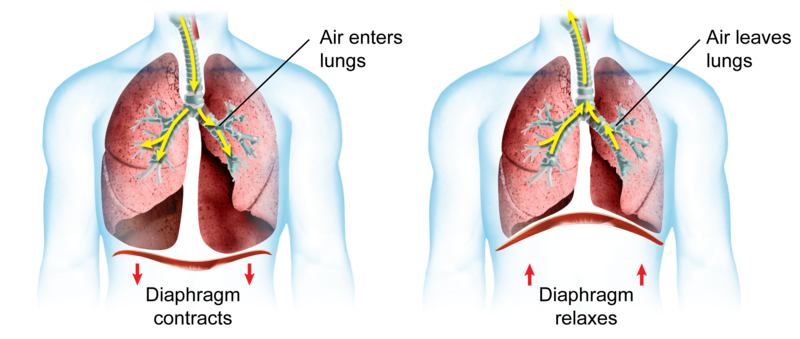
Diaphragmatic breathing (often called deep or belly breathing) is a technique that lets us intentionally and more consciously engage our diaphragm (the muscle just below our lungs) to help calm our stress response and support the parasympathetic nervous system (PNS). It can take a little practice to learn, but once you build it into “muscle memory,” you can use it just about anywhere and anytime. Let’s start with the basics.
• Get into a comfortable position. You know the drill. Feet squarely on the floor, back comfortably upright, shoulders and arms relaxed.
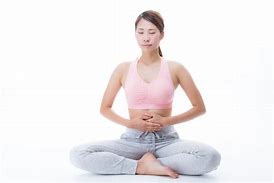
• Place one hand on your chest and the other on your stomach just below your ribs. This will allow you to be aware of how your chest and abdomen move as you breathe.
• Keeping your mouth closed, take a slow, gentle breath through your nose.
• Allow your stomach to expand. Imagine your belly as a balloon slowly filling with air. You will know you are engaging the diaphram if the hand on your stomach moves outward more than the one on your chest. This is your diaphragm working. No need to force a bigger breath than feels comfortable.
• Now, let out your breath slowly through your nose. As you breathe out, pull your stomach toward your spine. Allow the air to flow out slowly and comfortably (imagine the balloon deflating).
If you can, try to do this cycle of breathing five times in a row. Don’t worry if you didn’t get it exactly right the first time; just try again. If you feel tightness in any parts of your body, give it permission to relax for a bit. If you find your mind wandering, just acknowledge it and bring your focus back to your breathing.
There are numerous variations to deep breathing exercises, so sometimes you have to experiment a little and find the one that’s right for you. Just remember, the goal isn’t to take the biggest breath possible. It’s to develop a slow, comfortable breathing pattern that helps your body settle down.
Another great variation is the 4-7-8 breathing technique developed by Andrew Weil at the University of Arizona. I especially like this one because I’ve found it helpful for recentering when I feel I might be moving toward a panic attack. However, if holding your breath feels uncomfortable, don’t force it. A slower, gentler breathing pattern without holding your breath may work better for you.
• Get into a comfortable position.
• Gently place your tongue so that it presses against the back of your top teeth.
• Exhale all the air around your tongue through your open mouth.
• Close your mouth and then inhale through your nose while counting silently to 4. Remember to engage the diaphragm. Place a hand on your tummy if that helps.
• Now, count to seven while you hold your breath.
• Finally, gently exhale through your open mouth while silently counting to eight. You can even imagine you are blowing out candles and make a “whoosh” sound out loud.
• Repeat this for a total of four breath cycles.
Okay, hopefully, you are excited about developing an ongoing friendship with your breath and learning how to use it more effectively. Of course, like with anything we want to incorporate into our life and work routine, we have to practice. I recommend taking a few minutes twice each day (when you aren’t experiencing significant stress) to practice focused breathing. Maybe that is when you first get up in the morning, right after your lunch break, or as part of your nightly wind-down routine. Not only can daily practice contribute to our overall well-being, but it can also make these techniques feel more natural, so we can pull them out of our wellness toolbox when we need them. With practice, you can even learn to naturally incorporate a simple breathing technique while in the midst of a stressful conversation without making it look like you are getting ready to start a yoga session.
Application to Strengths Model practice
In terms of Strengths Model practice, the goal of learning how to breathe effectively isn’t just so you will have a handy calming trick. Limping along each day and continuously employing coping strategies while trying to swat away the multitude of stressors that come our way is exhausting. For Strengths Model practice, one of the most important reasons to learn intentional breathing is to help us reconnect with the cognitive functions involved in effective decision-making. Acute stress can impact our ability to use working memory, remain cognitively flexible, pay attention, and respond with empathy.
Chronic stress doubles down on all those things. Basically, stress can take key executive functions offline similar to losing internet access on your phone (let that panic sink in for a bit). Intentional breathing can help calm our stress response and give those executive functions a better chance to come back online (Whew!). We now are in a better position to respond and act. Strengths Model practice is about being grounded and intentional versus being unbalanced and reactive. Breathing is key to this because it allows us to better employ the skills we have learned or stay engaged in learning as we are learning new skills.
Here are some potential situations where taking a few minutes to breathe and recenter can be helpful in Strengths Model practice.
1. Starting the workday. How many times do we start the workday dreading what’s to come? Instead, take a few moments to breathe, accept that the day may bring its challenges, and open yourself to the potential opportunities that may arise.
2. Prior to a session. Each interaction you have with a person can influence your physiological responses and theirs, including the biochemistry associated with stress. So, ground yourself first so you are bringing your full, present self to the helping relationship.
3. When you start to feel “triggered” by something said in a session. Often our response is to immediately react to the discomfort we are experiencing. Use breathing to help us regain a calmer, more centered state so we can respond with empathy and constructive action.
4. Introducing or using any of the Strengths Model tools. Taking a brief moment to breathe before launching into using any tool can help bring to awareness the purpose of using it. It also opens us to mindful listening versus rushing to record information on tools.
5. When you feel the inner voice of judgment. This could be related to something a client is saying or doing or self-criticism.
6. Immediately after a session. Sometimes, we don’t have much time between sessions. However, it is important to take a brief moment to breathe and bring some sense of closure before our next activity.
7. At the end of the workday. Often what can occupy our thoughts on the way home is anything that went wrong throughout the day (or the dread of what might be greeting us when we get home). There are days that we may feel that we have been through the wringer. Breathing can afford us some time to have compassion on ourselves, even if some things didn’t turn out the way we hoped. Breathing can help affirm that we are safe and the person we are still exists. It also might give us the opportunity to acknowledge a few things that did go well and validate our efforts. It can also remind us that tomorrow will be a new day with opportunities to make a difference.
Back in November 2009, breathing helped me get through a difficult time. More importantly, it gave me the opportunity to be present to myself and not just the thoughts swirling through my mind. Breathing didn’t take away those stressors, but it allowed me to recenter and refocus on what I could do at any moment. Even if that was just a small step forward.
Bonus note: If you like songs related to breathing, another great one I like to listen to is “Breathe (2 AM)” by Anna Nalick. She wrote this song during a challenging time in her life. It is about taking a step back, embracing vulnerability, and finding strength in oneself. Good stuff.