
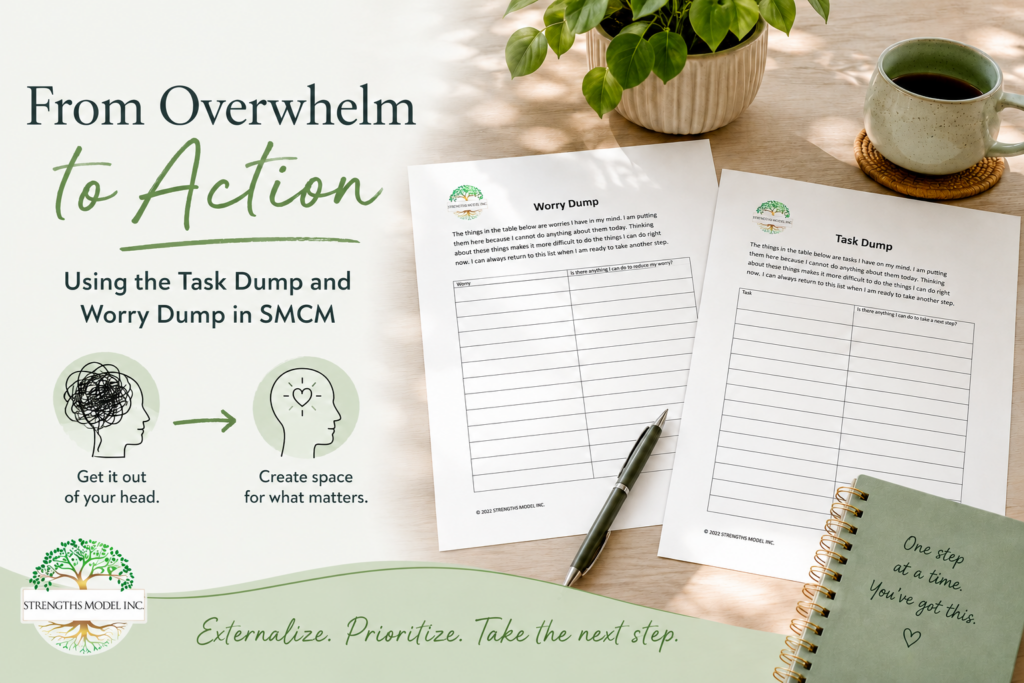
Simple tools that help people verbalize feelings of being overwhelmed, regain focus, and continue moving toward meaningful goals.
“I want to move forward with this goal… I just don’t even know where to start.”
In Strengths Model Case Management (SMCM), one of the most common barriers to forward movement is not a lack of motivation, it’s being overwhelmed. Individuals often carry a mix of unfinished tasks and persistent worries that compete for attention, making it difficult to focus on meaningful next steps toward their goals.
Two simple but highly effective tools within SMCM—the Task Dump and the Worry Dump—help create clarity, reduce distress, and support purposeful action.
These tools can be useful to engage people who seem overwhelmed about a particular goal before starting a Personal Empowerment Plan (PEP). The intent is to allow people space to communicate thoughts that are driving the internal stress, look at it visually together, and mindfully make decisions about a small, manageable step or two that could be taken using the PEP.
The purpose is not to solve everything at once.
The purpose is to:
- Create space
- Reduce mental clutter
- Support focus
- Identify manageable next steps
Why These Tools Matter in SMCM
One of the most challenging parts of achieving a goal or moving toward something we value is getting started. While initially the thought of achieving a goal that is meaningful or important to us can be exciting, these thoughts can quickly turn to:
- Doubts
- Fears
- Worries
- Ambivalence
- Uncertainty
- Pressure
Sometimes, it can result in us not taking a step at all.
People often find themselves thinking about:
- The multitude of things that need to be done
- Persistent worries about what might happen along the way
- Whether they are capable of succeeding
- Difficulty identifying what they can realistically do right now
Without a way to help people organize these thoughts, case management sessions can become reactive, unfocused, or unproductive. The Task Dump and Worry Dump provide a practical way to organize thoughts while honoring the person’s experience.
Three Core Purposes of These Tools
✓ Validation
Acknowledge that the person’s thoughts, stress, and concerns are real.
✓ Containment
Create a place to “park” thoughts that cannot be acted on immediately.
✓ Focus
Free up mental space to identify actionable next steps.
The Task Dump
Organizing Overwhelming Thoughts Into Actionable Space
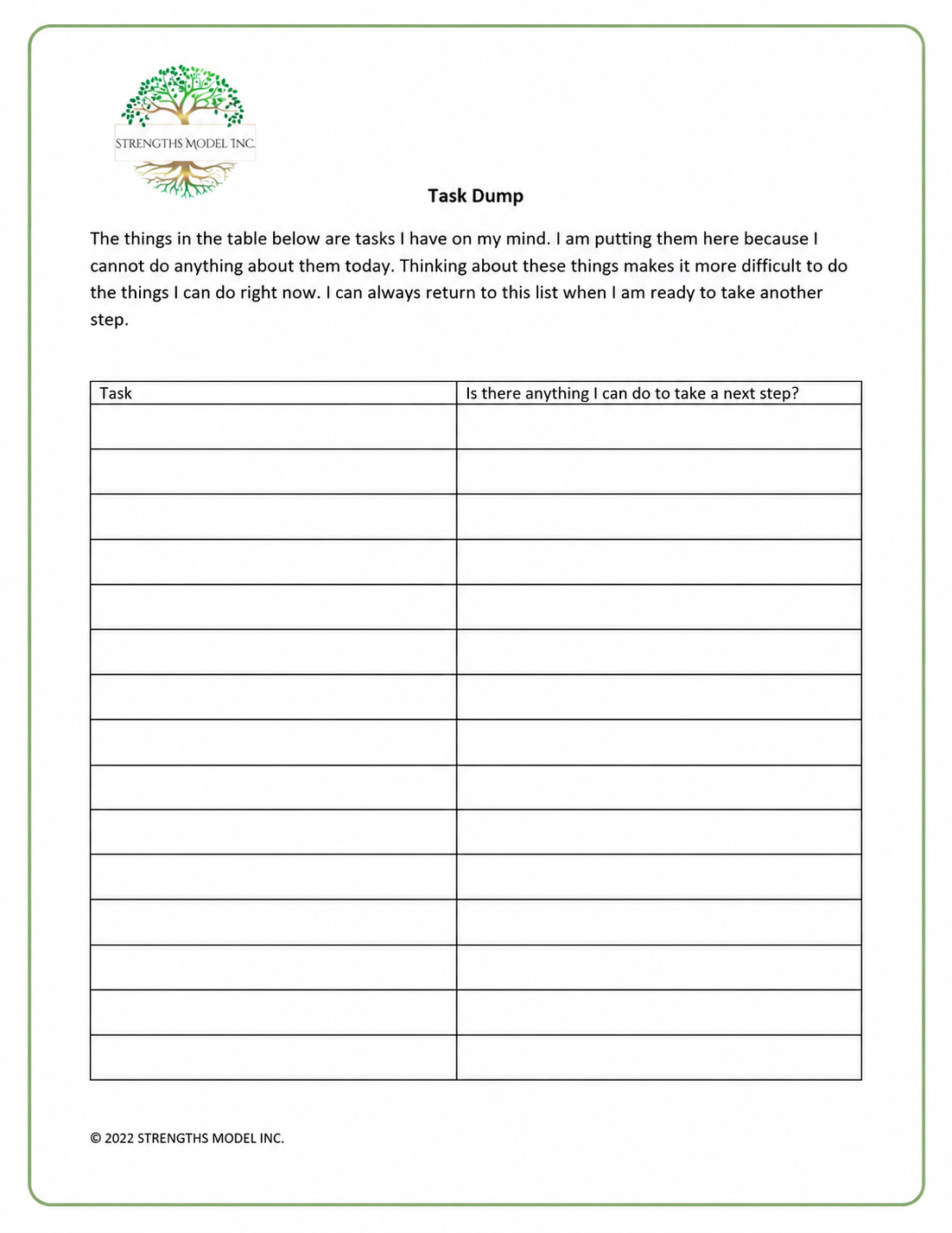
The Task Dump is used when a person feels overwhelmed by everything they need to do to move toward a goal.
Rather than trying to prioritize or solve everything at once, the Task Dump creates a structured space to capture future tasks that may be overwhelming the person—especially tasks that cannot be addressed immediately.
Putting tasks on the Task Dump communicates:
“We are not ignoring these things. We are acknowledging them while recognizing that they may not be things we can act on today.”
This often creates psychological relief. People no longer have to carry every task mentally while trying to focus on the present.
How the Task Dump Helps
- Reduces cognitive overload
- Prevents important tasks from being forgotten
- Creates psychological relief
- Supports intentional focus on immediate next steps
How to Use the Task Dump in Practice
1. Invite the person to list any tasks related to their goal that feel overwhelming.
2. Write each task down without filtering or prioritizing.
3. For each item, ask:
“Is there anything you can do to take a next step right now?”
4. If not, place it on the Task Dump.
The wording at the top of the worksheet reinforces this process:
“The things in the table below are tasks I have on my mind. I am putting them here because I cannot do anything about them today. Thinking about these things makes it more difficult to do the things I can do right now. I can always return to this list when I am ready to take another step.”
Key Connection to the PEP
Once tasks are externalized, the case manager and the person can shift toward the Personal Empowerment Plan (PEP) and identify:
- What is a small, manageable step or two that can be taken between now and our next meeting?
- What support will be needed to take these next steps?
- What strengths can help support progress?
The Worry Dump
Containing Anxiety to Support Forward Movement
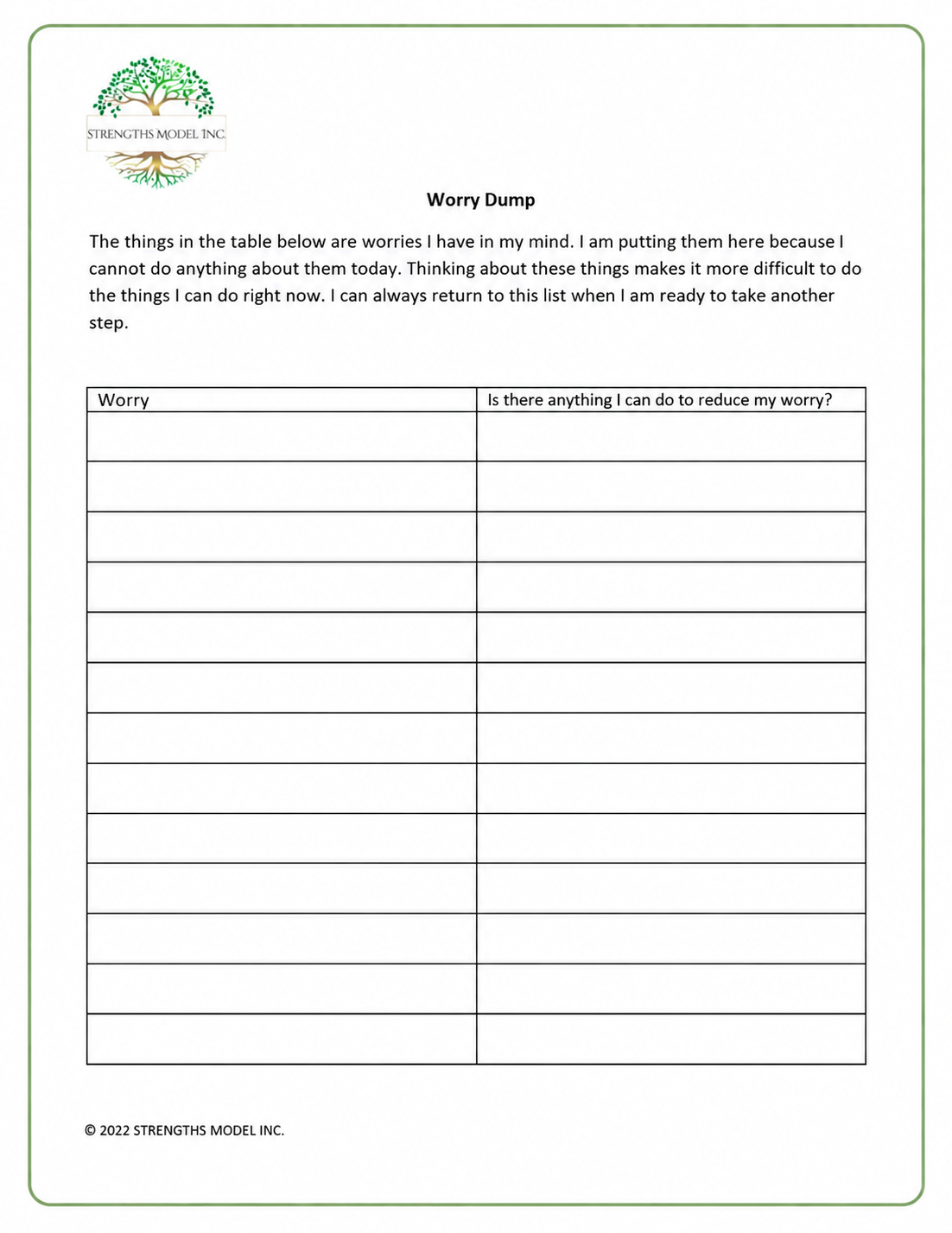
The Worry Dump is used when a person becomes preoccupied with fears, “what ifs,” or anticipated barriers—often before anything has actually happened.
These worries can derail progress even when the person genuinely wants to move toward a goal.
The Worry Dump creates a space to acknowledge worries without allowing them to dominate the session.
How the Worry Dump Helps
- Validates fear and anxiety without dismissing it
- Prevents worry from dominating the conversation
- Creates space for problem-solving when appropriate
- Reinforces a focus on what is within the person’s control
- Supports emotional containment and direction
How to Use the Worry Dump in Practice
1. Invite the person to openly name their worries.
2. Write each worry down.
3. For each worry, ask:
“Is there anything you can do to reduce this worry?”
4. If yes, identify a realistic strategy.
Examples might include:
- Gathering information
- Practicing a skill
- Increasing support
- Breaking the concern into smaller steps
5. If no, place it on the Worry Dump.
The wording at the top of the worksheet reinforces this process:
“The things in the table below are worries I have in my mind. I am putting them here because I cannot do anything about them today. Thinking about these things makes it more difficult to do the things I can do right now. I can always return to this list when I am ready to take another step.”
Key SMCM Connection
The Worry Dump reinforces a central Strengths Model Case Management principle:
Focus on possibility and action—not paralysis by uncertainty.
It allows case managers to acknowledge fears compassionately while still supporting movement toward meaningful, value-based goals.
Using Both Tools Together
In some sessions, both tools may be useful.
Task Dump
“There are too many things to do.”
Worry Dump
“I’m afraid of what might happen.”
Together, these tools help separate:
- Actionable tasks
- Non-actionable concerns
This separation is powerful.
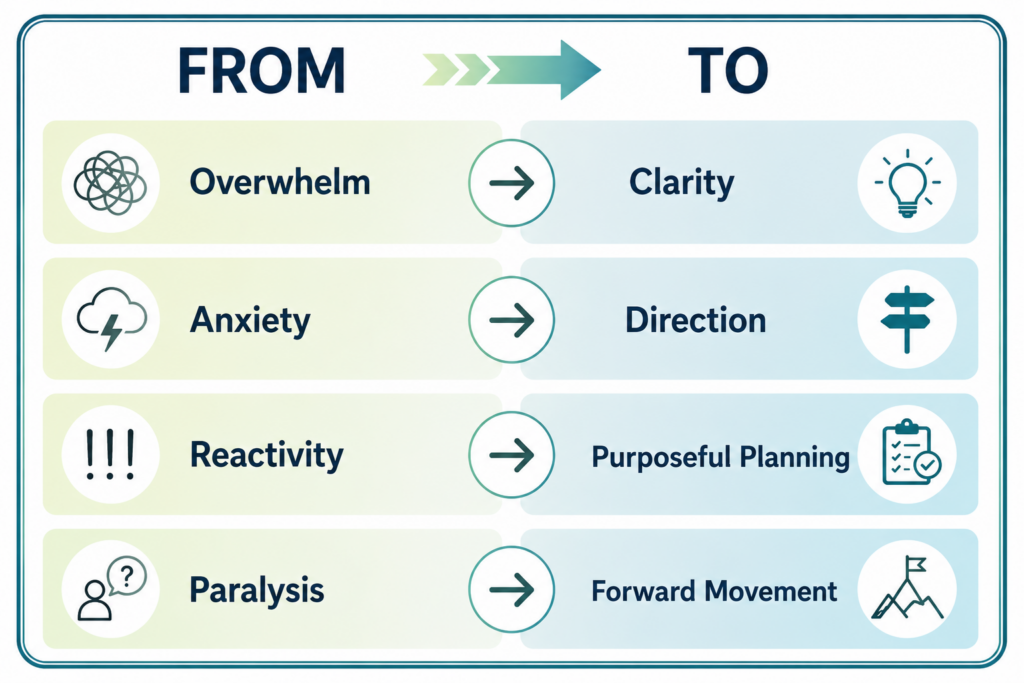
It helps shift sessions from:
Integrating Into the Personal Empowerment Plan (PEP)
The Task Dump and Worry Dump are not ends in themselves. They are gateways to purposeful planning.
After completing either tool:
- Identify 1–2 manageable next steps
- Ensure steps are:
- Specific
- Achievable
- Aligned with the person’s strengths
- Realistic between sessions
- Capture these steps on the Personal Empowerment Plan (PEP).
This keeps the work mindfully grounded in forward movement, not just processing distress.
Practice Tips for SMCM Practitioners
✓ Normalize overwhelm and worry
These are human experiences—not necessarily barriers to moving toward valued goals.
✓ Avoid trying to solve everything in one session
The goal is clarity and movement, not perfection.
✓ Use the tools visually
Seeing thoughts on paper often reduces their emotional intensity.
✓ Return to the lists over time
These are living documents that can evolve as the person moves forward.
✓ Celebrate small movement
Even very small steps create momentum.
Final Thought
The Task Dump and Worry Dump are deceptively simple tools.
But when used intentionally, they embody the essence of Strengths Model Case Management:
- Respect the person’s experience
- Create structure without control
- Focus on what is possible
- Support meaningful, self-directed progress
By helping people “clear mental clutter”, these tools create space for what matters most:
Hope. Action. Forward movement. Empowerment.
Interested in Learning More About Strengths Model Case Management?
- SMCM training opportunities
- Implementation support
- Coaching and consultation
- Practical tools for strengths-based work
Contact Rick Goscha at rick@strengthsmodel.com